Reclaiming Control: Anger & Conflict Therapy
Anger is a natural emotion, but when it becomes explosive or destructive, it can damage the things you value most. We help you move from reactive "outbursts" to proactive responses by training both the mind and the brain.
Start Managing Your Reactions
The Physiology of Reactivity
The "Snap" Response
Feeling like your anger goes from zero to a hundred in seconds with no time to think.
Chronic Irritability
A low-level "simmering" that makes even small inconveniences feel like major threats.
Physical Tension
Clenched jaw, rapid heart rate, and a "heat" that takes over before you've even spoken.
Regret Loops
The painful cycle of an outburst followed by deep guilt, shame, and damaged trust.
Evidence-Based Anger Management
Mastering the skills to stay in the driver's seat of your life.
Cognitive Behavioral Therapy (CBT)
Identifying "hostile attribution bias"—the tendency to interpret neutral events as personal attacks—and reframing those thoughts.
Assertiveness Training
Learning to communicate needs and boundaries clearly without escalating to aggression or retreating to passivity.
De-escalation Strategies
Practical tools to "cool the system" during a conflict, including somatic grounding and structured time-outs.
Conflict Resolution Skills
Moving past "winning" an argument to finding collaborative solutions that preserve relationships.
Strengthening the Brain's "Brakes"
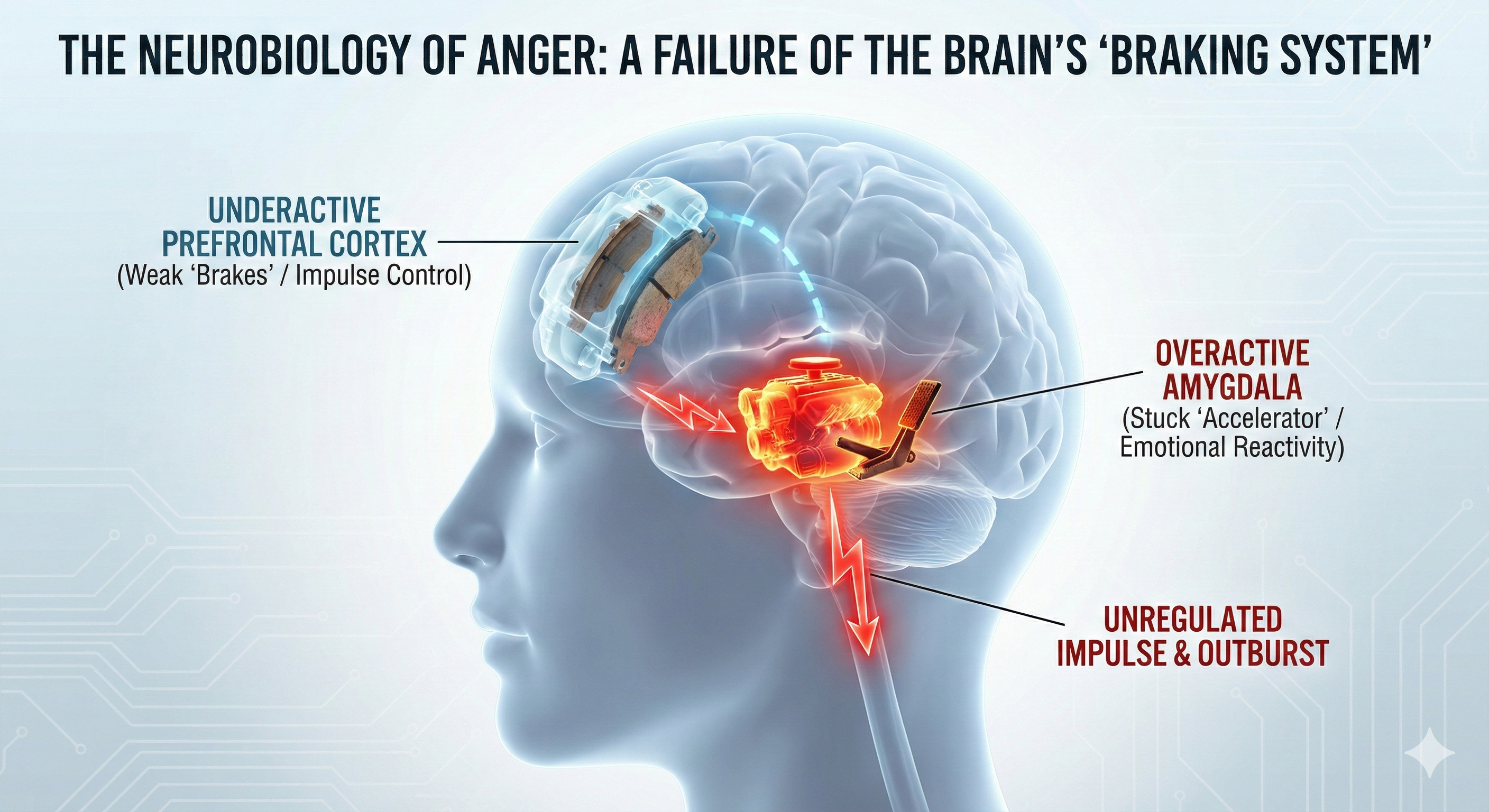
Anger often stems from an **under-active Prefrontal Cortex** and an **over-active Amygdala**. When the amygdala senses a threat, it highjacks your system. If the prefrontal cortex (the logic center) isn't strong enough to provide "brakes," an outburst is almost inevitable.
Top-Down: Strategy & Communication
Counseling helps you recognize early warning signs and choose healthier communication patterns.
Bottom-Up: Impulse Control Optional Booster
Neurofeedback trains the prefrontal cortex to remain engaged under stress, effectively strengthening your brain's biological "braking system."
The Science of Self-Regulation
Impulse Control Training
Clinical studies have shown that training specific EEG rhythms in the frontal lobes can reduce reactive aggression.
- Prefrontal Activation: Increasing SMR or Beta activity in the frontal regions correlates with improved executive function and inhibition.
- Reduced Reactivity: Participants often report a "gap" appearing between a trigger and their response where one didn't exist before.
Relationship Outcomes
Research into conflict management therapy consistently shows that improving individual regulation leads to higher relationship satisfaction.
- De-escalation: Couples therapy is significantly more effective when individuals have the tools to self-soothe before entering a difficult dialogue.
- Restored Trust: Long-term behavioral changes are the only proven method for repairing trust damaged by chronic anger.
Anger & Conflict FAQ
Break the Cycle of Outbursts
Invest in your relationships and your peace of mind. Our team in Ogden and SLC is ready to help.
Schedule Your First Step