Empowering the Next Generation: Child & Teen Therapy
Growing up today is complex. From social pressures to developmental hurdles, children and adolescents often face challenges that exceed their current coping skills. We provide a supportive environment where kids can learn to regulate their emotions and build lasting resilience.
Connect With a Child Specialist
Supporting Your Child's Well-being
Emotional Regulation
Helping children manage big feelings, frequent meltdowns, or intense irritability.
Social & Peer Issues
Navigating school anxieties, bullying, or difficulty making and keeping friends.
Behavioral Struggles
Addressing defiance, impulsivity, or sudden changes in school performance.
Developmental Support
Providing tools for children with ADHD, sensory sensitivities, or learning differences.
Our Developmental Approach
Meeting children where they are, through the language of play and connection.
Play-Based Therapy
For younger children, play is their natural language. We use toys, art, and games to help them express what they cannot yet put into words.
Teen-Centered Counseling
Adolescents need a space where they feel heard and respected. We focus on identity, autonomy, and healthy coping for the teen years.
Parental Coaching & Collaboration
Healing happens in the context of the family. We work closely with parents to provide strategies for home and school.
Executive Function Training
Practical skills for organization, time management, and focus to help children succeed academically and socially.
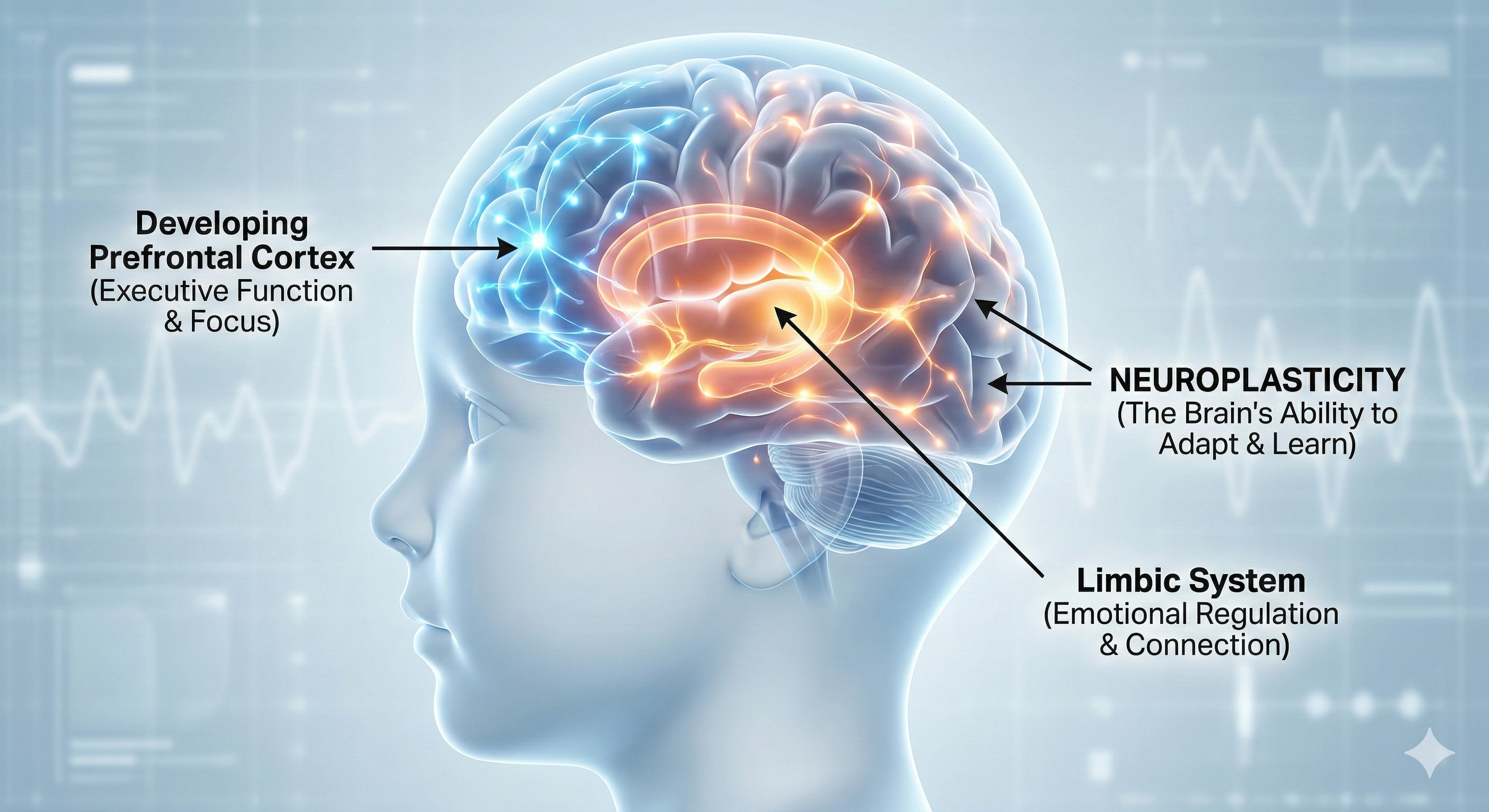
Training the Young Brain
A child's brain is incredibly "plastic"—it is designed to learn and adapt. However, when a brain is stuck in a state of chronic dysregulation (like ADHD or anxiety), it can become hard for them to learn new behaviors through talk alone.
Top-Down: Behavioral Skills
Therapy helps children understand their emotions and learn new "tools" to navigate difficult situations.
Bottom-Up: Neurological Regulation Optional Booster
Neurofeedback acts as a "gym" for the developing brain. By rewarding calm and focused states, we help the brain stabilize its own rhythms, making behavioral therapy much more effective.
Child Therapy FAQ
Supporting Your Child's Future
Invest in your child's emotional health today. Our specialized child team in Ogden and SLC is here to help.
Book an Initial Consultation